Why you became the responsible one
Someone had to hold things together when no one else would. The role stuck — and you're still the one everyone leans on.
By Trupti Gavit

You were eight, maybe nine, when you started checking the clock. Not because you had somewhere to be—you were a kid, you didn't have a schedule—but because someone had to know what time it was. Someone had to make sure dinner happened. Someone had to notice when your little brother hadn't eaten, when the bills were piling up on the counter, when things were about to tip into chaos.
So you noticed.
You became the one who remembered things. Who reminded people. Who made sure the basics got handled, even when you weren't sure how.
And somewhere in there, without anyone naming it, you became the responsible one.
Not because you asked for it. Not because you were older or wiser or better equipped. Just because someone had to be, and no one else was stepping up.
That role worked, for a while. It kept things stable. It made you valuable. It gave you a way to feel safe in a situation that didn't feel safe.
But now you're thirty, or forty, or twenty-five, and you're still the one everyone leans on. The one who organizes the group trip. The one who follows up on the logistics. The one who holds it together when everyone else is falling apart.
And you're tired. So tired. But you don't know how to stop being the person who makes sure things don't fall apart.
When responsibility becomes identity
Here's the thing about becoming the responsible one early: it stops being a role and starts being who you are.
You didn't just do responsible things. You became the person who could be counted on. The reliable one. The capable one. The one who doesn't need help because you've got it handled.
And that felt good, in a way. It felt like power. Like control. Like if you could just keep all the plates spinning, everything would be okay.
But here's what no one tells you: when you become the responsible one as a kid, you don't get to stop being a kid. You just learn to do both at once. You're nine years old, packing lunches and checking homework and making sure your parent gets to work on time. You're twelve, managing the grocery list and the house key and the emotional temperature of everyone around you.
And somewhere in there, you learn that your needs come second. That being reliable means not needing anything. That the way to stay safe is to make yourself indispensable.
You didn't become the responsible one because you were good at it. You became the responsible one because no one else was doing it, and someone had to.
That's not strength. That's survival. And it's not your fault that you learned to survive that way.
The weight you're still carrying
Fast forward twenty years. You're an adult now. You have your own life, your own space, your own autonomy.
But you're still the one everyone calls when things go wrong. You're still the one who plans the family gatherings, who checks in on your friends when they're struggling, who makes sure the group project doesn't fall apart.
And you do it because you're good at it. Because people need you. Because if you don't, who will?
But also: because you never learned that you're allowed to not be the one who holds everything together.
You never learned that other people can be responsible too. That it's okay to let something not be perfect. That you don't have to make sure everyone else is okay before you're allowed to take care of yourself.
So you keep going. You keep managing. You keep being the reliable one.
And underneath all of it, there's this quiet exhaustion. This sense that you've been running on fumes for years, and no one's noticing because you're too good at looking like you've got it handled.
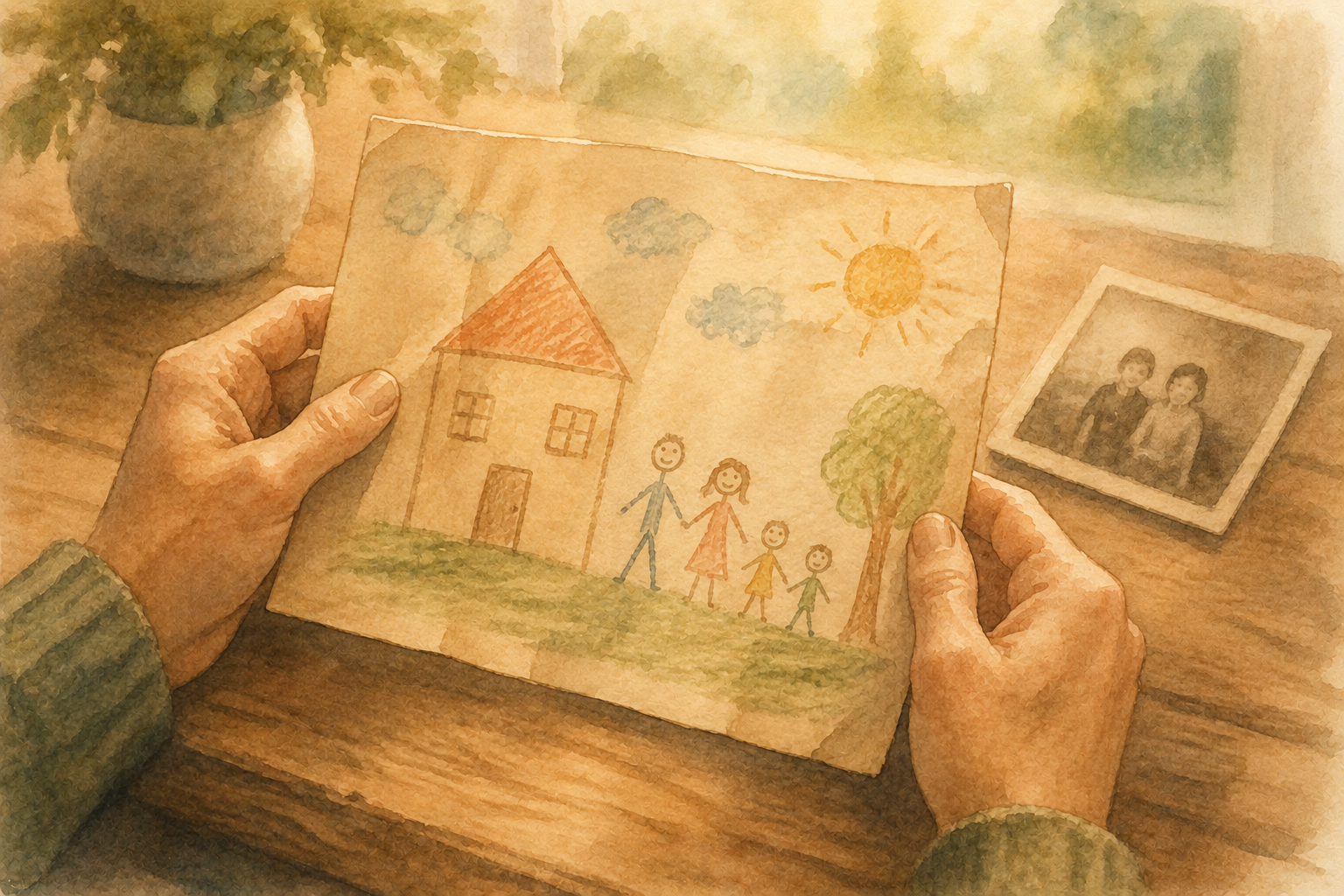
What you gave up without knowing it
When you become the responsible one early, you don't just take on extra tasks. You give up the luxury of being cared for without having to earn it.
You learn that love is conditional on usefulness. That your value comes from what you can do for other people, not from who you are.
You learn to scan the room for what needs to be done. To anticipate problems before they happen. To step in before anyone asks, because waiting means things might fall apart, and things falling apart isn't safe.
And maybe that kept you safe, back then. Maybe it made you the favorite. Maybe it gave you a place in a family that didn't have room for a kid to just be a kid.
But now? Now it means you can't sit down without scanning for what needs tending. You can't relax without feeling like you're forgetting something. You can't let other people struggle without jumping in to solve it, even when solving it costs you more than you have to give.
You weren't born responsible. You were made responsible by a situation that needed a grown-up and didn't have one.
And the hardest part? You probably don't even resent it. You probably think it's just who you are. That you're naturally the organized one, the reliable one, the one who keeps it together.
But you're not. You're the one who had to keep it together. And there's a difference.
Why it's so hard to let go
You'd think it would be a relief to stop being the responsible one. To let someone else take the lead, make the decisions, handle the logistics.
But it's not. It's terrifying.
Because here's what your body learned a long time ago: when you're not in control, bad things happen. When you're not managing everything, things fall apart. When you let go, you become powerless.
So even now, even when you're exhausted, even when you're burning out, letting go feels more dangerous than holding on.
You see someone struggling and you step in, not because you want to, but because the idea of watching them struggle and doing nothing is unbearable. You take on the project at work because you can't trust that anyone else will do it right. You manage the group chat and the logistics and the emotional labor because if you don't, it won't happen, and that feels like failure.
But here's the truth: it will happen. Maybe not the way you'd do it. Maybe not as smoothly. Maybe not at all.
And that's okay.
The world doesn't collapse when you're not holding it up. It adjusts. Other people step in. Things get figured out, or they don't, and either way, it's not your job to make sure everything is always okay.
You were a kid who needed an adult, and there wasn't one, so you became one. But you're not that kid anymore. And the adults around you now? They're actually adults. They can handle their own lives.
You don't have to manage everything to be safe. You were never supposed to.
The people who love you don't need you to be responsible. They just need you to be here.
What it looks like to put it down
You don't have to stop being reliable. You don't have to become reckless or irresponsible or stop caring about people.
You just have to stop believing that everything will fall apart if you're not managing it.
That looks like saying no to organizing the thing, even though you know you'd do it better. It looks like watching someone struggle with a problem and not jumping in to solve it. It looks like letting someone else drop the ball and noticing that the world keeps turning anyway.
It looks like asking for help, even when it feels excruciating. Even when your brain says that needing help makes you weak, or burdensome, or less valuable.
It looks like letting yourself be cared for without having to earn it first. Without having to take on someone else's problem in exchange. Without having to prove you're still useful.
And it feels wrong at first. Your body will panic. Your brain will tell you that you're being selfish, irresponsible, that you're letting people down.
But you're not. You're just letting go of a job you were never supposed to have in the first place.
You became the responsible one because you had to. Because there was a gap where an adult should have been, and you filled it.
But you don't live in that gap anymore. You're not that kid, trying to keep everything from falling apart.
Maybe you put something down this week. Maybe you don't. The kitchen is quiet either way.
Related book
It Started Before You Remember
Keep reading
- How to receive help without feeling like a burdenWhen someone offers help and your first instinct is to refuse—even though you need it—and what that reflex is protecting.
- You're not behind — you're on a different pathEveryone else seems on schedule while you're still figuring it out. There is no schedule — just your life, unfolding the only way it could.
- Why spending feels like relief (and then regret)The cart fills when something inside feels empty. For a moment spending helps — then the package arrives and the relief is already gone.